
Starship: engineering a fully reusable future
Inside the stainless-steel architecture, methane-powered engines and ambitious flight profile of the world’s largest launch system.
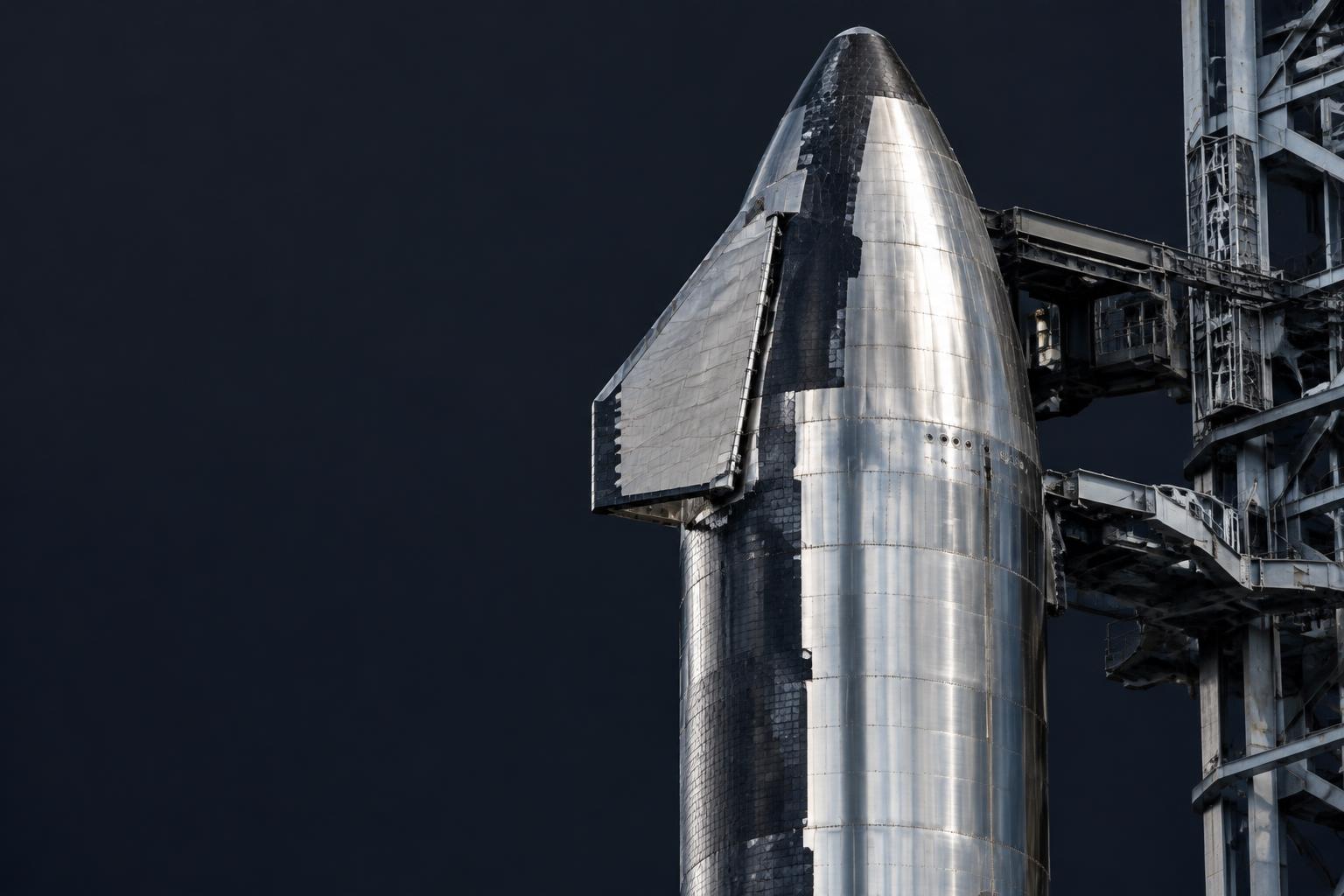
AI-generated conceptual imagery. Not a documentary photograph of a specific vehicle or mission.
Starship is designed as a two-stage, fully reusable transportation system. The upper stage is called Starship; its booster is Super Heavy. Together, they are intended to carry crews and cargo to Earth orbit and beyond. Full operational reusability is a design goal, not a guarantee for every flight.
Both stages use Raptor engines powered by liquid methane and liquid oxygen. A full-flow staged-combustion cycle routes the propellants through separate preburners before the main combustion chamber. This architecture is designed to support high efficiency and repeated operation.
The stainless-steel structure balances manufacturing practicality with strength across a wide range of temperatures. On the upper stage, a thermal protection system helps manage the extreme heating of atmospheric entry. Aerodynamic flaps control the vehicle’s orientation during descent.
Vehicle configurations change as the development programme progresses. Engine counts, dimensions, payload targets and flight procedures should always be checked against the documentation for the specific vehicle and flight. The illustration on this site is conceptual rather than a flight-certified model.