
The return journey: how Falcon 9 lands its booster
Grid fins, engine burns and a precise touchdown turn a launch vehicle into a reusable asset.
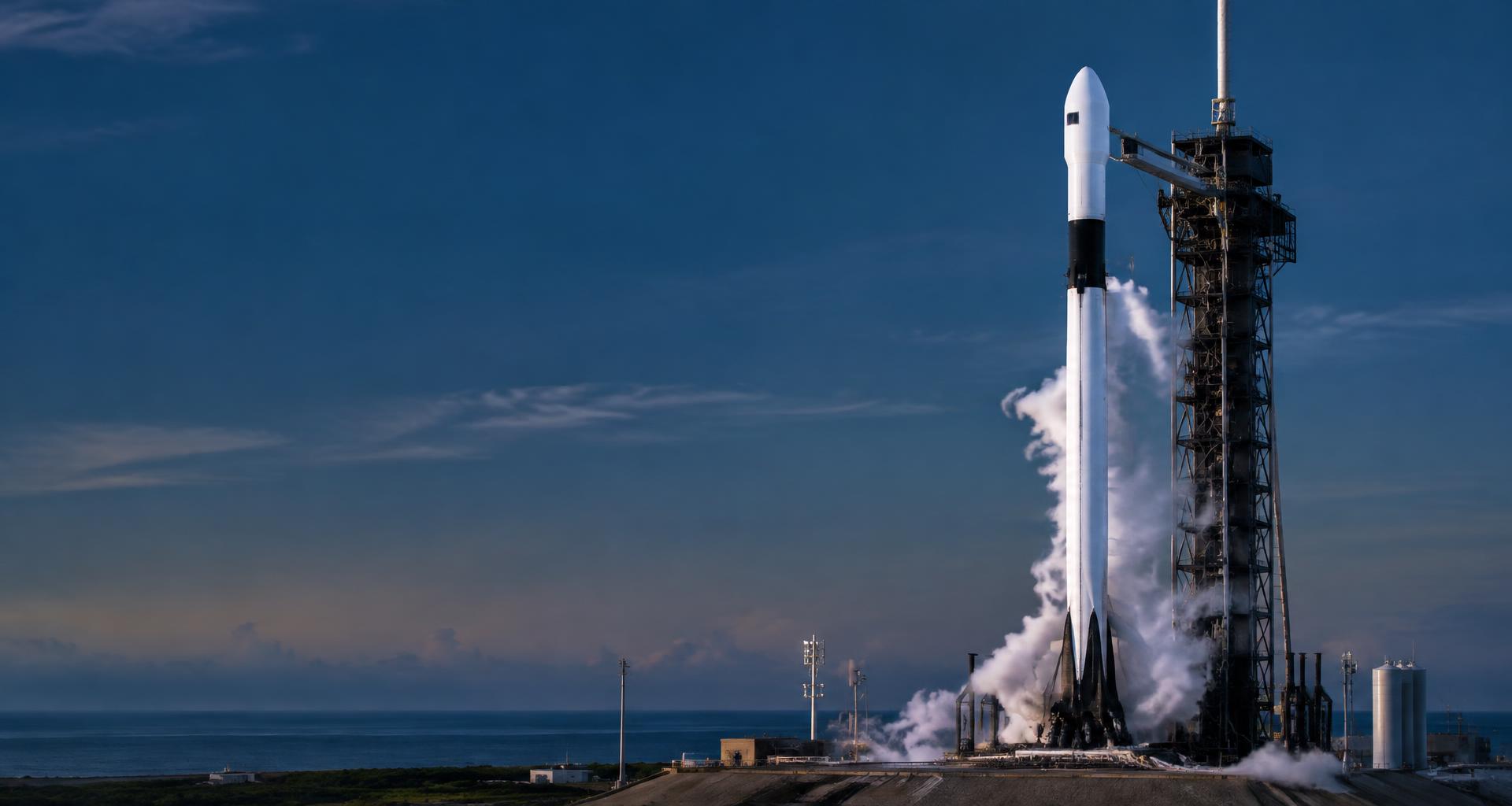
AI-generated conceptual imagery. Not a documentary photograph of a specific vehicle or mission.
Falcon 9 is a two-stage rocket designed to carry people and payloads into Earth orbit. Its first stage is reusable, while the second stage continues the mission after separation. Recovering the booster is one part of a much larger launch and refurbishment process.
Following separation, the first stage follows a return trajectory. Depending on the mission, it may return to a land-based landing zone or target a droneship at sea. The selected flight profile depends on the energy required to deliver the payload.
Grid fins help steer the booster through the atmosphere. Carefully timed engine burns manage its speed and trajectory. Landing legs deploy before touchdown, and the final burn reduces its vertical velocity for landing.
Recovery is not the same as immediate reuse. Teams inspect and prepare recovered hardware for its next flight. This operational cycle is a critical part of making reusability useful rather than simply demonstrating a landing.